Introduction
- Introduction
- Quick answer
- 1. How B2B buyers actually pay
- 2. When card or ACH wins
- 3. When invoicing and POs win
- 4. Hybrid models that work
- 5. Gateway capabilities vs finance reality
- 6. Fraud and “trusted buyer” myths
- 7. International and multi-entity B2B
- 8. When to choose custom integration
- Key takeaways
- FAQ
- Related reading
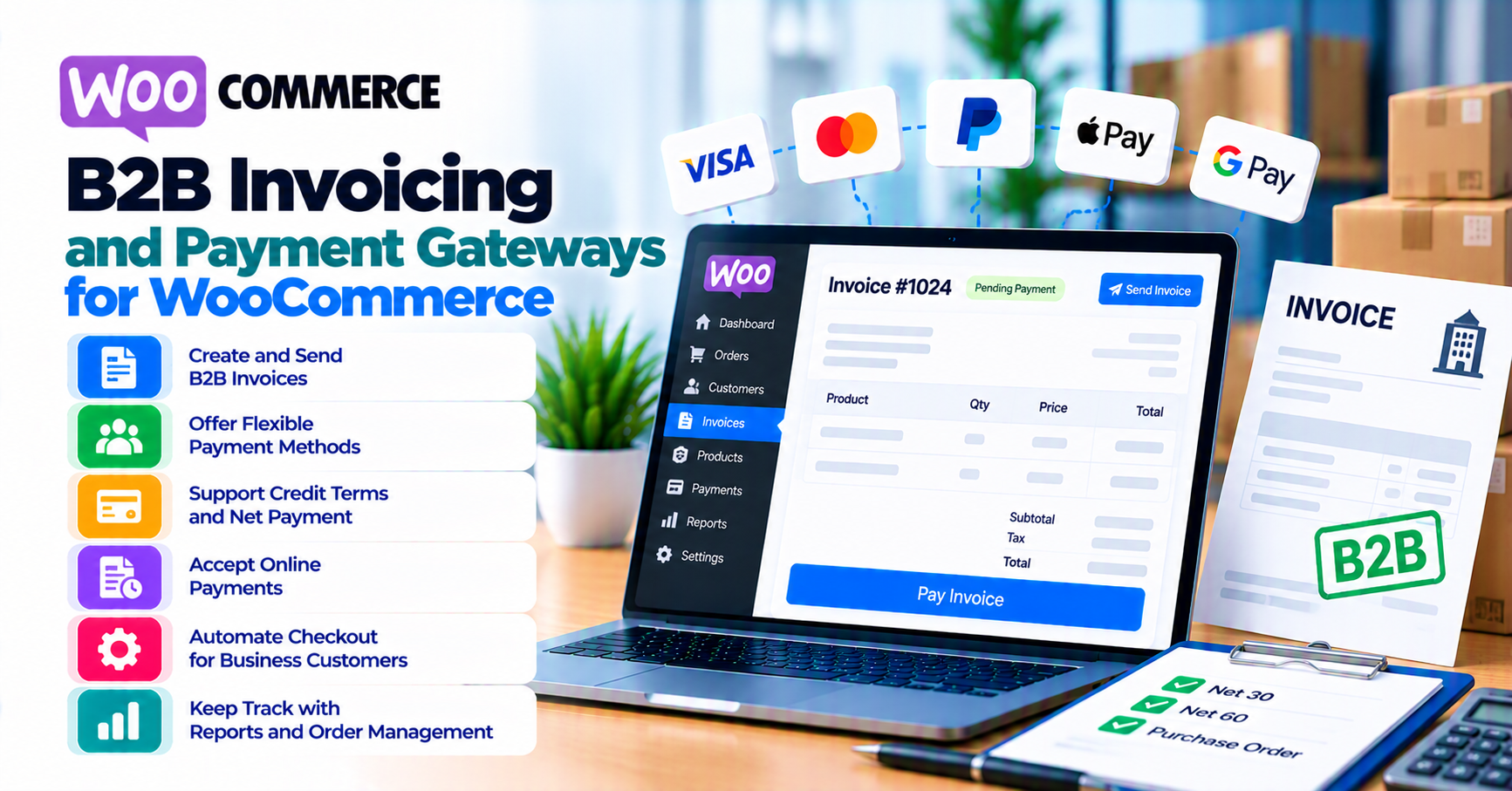
B2B stores on WooCommerce often juggle purchase orders, net-30 invoicing, and card checkout in the same cart. Payment gateways excel at immediate authorization, refund speed, and settlement visibility in dashboards your ops team can act on. Invoicing workflows excel when finance needs approval chains, open AR, and buyer AP processes—but they add collections, credit risk, and reconciliation overhead that card-first merchants rarely model until month-end pain arrives.
This article helps merchants and agencies choose patterns that match how customers actually pay, not only how the theme looks. For custom ERP-led flows, see custom payment gateway integration; for plugin-first setups, buying a payment gateway plugin for WordPress. If you sell subscriptions alongside one-off B2B orders, align with subscriptions and payment gateways.
Quick answer
Use card (or ACH where available and accepted) when you need immediate funds confirmation and lower AR overhead. Use invoicing / PO when contracts require approval, net terms, or buyer AP processes—but plan collections, dunning, and reconciliation explicitly. Hybrid models are common: card for small or urgent orders, invoice above a threshold or for approved accounts. Gateway choice should follow currency, country, and Level II/III needs—not logo preference alone.
1. How B2B buyers actually pay
Procurement teams optimize for audit trails, budget codes, and vendor master data—not your checkout UX. That does not mean they refuse cards; it means failure modes differ:
- Small or replenishment orders often land on corporate cards for speed.
- Large or contractual buys may require PO numbers, goods receipt, and three-way match before AP releases funds.
If your store only offers card, you may lose deals that must flow through invoice. If you only offer net terms without credit checks, you absorb default risk. Map five real customer journeys before you standardize on one payment story.
2. When card or ACH wins
Card and ACH (where supported) fit when:
- Time-to-cash matters more than net-30 float.
- Fulfillment is fast (digital, stocked SKUs) and you want authorization before ship.
- Ops prefers gateway exports over manual invoice matching.
Pair gateway reporting with payment gateway analytics so finance sees declines, refunds, and method mix—not only GMV.
Level II/III data (where applicable) can affect interchange for B2B cards—confirm with your processor whether your plugin and checkout fields capture what they require; generic retail setups often omit line-item detail finance expects.
3. When invoicing and POs win
Invoice and PO flows fit when:
- Legal requires signed orders before payment.
- Buyer AP batch pays weekly or monthly—not at checkout.
- Credit teams underwrite accounts and set limits.
WooCommerce can issue invoices via plugins, accounting bridges, or manual PDF—the hard part is collections: who chases 30+ day AR, how disputes are logged, and how refunds interact with partial shipments. If chargebacks enter the picture for card experiments, read chargebacks vs refunds before policy promises.
4. Hybrid models that work
Common patterns:
- New accounts: card or prepay until credit approved.
- Above threshold: PO required field + manual review queue.
- Subscriptions: card on file for usage overage; invoice for base fee (requires discipline in billing ops).
Document cutoffs in FAQ and sales playbooks so support does not negotiate terms ad hoc in Zendesk.
5. Gateway capabilities vs finance reality
Ask:
- Does your processor support Level II/III data if you need interchange optimization?
- Do you need stored payment methods for reorders—tie to subscriptions if recurring is core.
- Will finance accept gateway settlement reports as source of truth, or do they require ERP reconciliation rules?
If reports disagree, no gateway feature fixes culture—align definitions of “paid” (authorized vs captured vs settled) before you automate.
6. Fraud and “trusted buyer” myths
B2B buyers are not automatically low fraud. Account takeover, invoice fraud, and social engineering against AP teams happen. Layer verification for first-time large orders; align with real-time fraud tools. Velocity limits and manual review for new domains pair well with payment failure recovery messaging—declines are data, not personal failure.
7. International and multi-entity B2B
Currency and entity billing add complexity—see international payments on WooCommerce. VAT IDs, W-8/W-9 collection, and split payouts may force processor choices that pure US card guides skip. If Blocks checkout is in scope, keep UX consistent with WooCommerce Blocks checkout and payment gateways.
8. When to choose custom integration
Non-standard approval routing, multi-entity settlements, or headless B2B portals often need custom work—get a quote. Compare build vs buy using payment gateway plugin vs custom integration and validate scope with PCI scope for merchants when card data touches custom middleware.
Key takeaways
Card and ACH optimize for speed and certainty of funds; invoice and PO optimize for procurement ritual and net terms—pick hybrids when your data says both cohorts exist. Gateway choice follows geography, Level data, subscriptions, and finance reporting—not theme demos. Document policies before scale so sales and support do not negotiate payment terms ad hoc.
FAQ
Should B2B ever default to card-only checkout?
Only if your ICP truly always pays card—validate with sales data, not assumptions.
How do we reduce invoice AR pain?
Clear terms, late fees where legal, automated reminders, and single AR owner—gateway plugins do not replace collections process.
What about digital wallets for B2B?
Useful for mobile reorders—see digital wallets on WooCommerce.